
How should parents apologize to their children when they have made mistakes?

Maybe your own parents never actually said the words. After an argument, they might have shown care in other ways:
“Come eat dinner.”
“Take off your clothes; I’ll wash them.”
“I’m going to the market—want to come along?”
These gestures were not real apologies; they were what many call “meal-style apologies”—a roundabout way to express regret without directly admitting fault.
While well-intentioned, this type of avoidance often sends the wrong message. To a child, it doesn’t say, “I recognize my mistake.” Instead, it says, “Let’s just move on so I can feel better about this.” Over time, these unspoken tensions quietly erode trust and emotional closeness between parent and child.
1. Why Parents Struggle to Say “I’m Sorry”
For many parents—especially in traditional cultures—apologizing to a child feels uncomfortable or even inappropriate.
They may fear losing authority or believe that showing vulnerability will make children less obedient.
But this belief couldn’t be further from the truth.When parents refuse to apologize, they unintentionally teach children that power is more important than honesty. And children who grow up without seeing adults take responsibility for mistakes often struggle to do the same later in life.
2. “Meal-Style Apologies”: Why They Don’t Work
On social media, many people joke about the “meal apology” their parents used after a fight:
“Come eat dinner before it gets cold.”
“I bought you your favorite fruit.”
“There’s ice-cold cola in the fridge.”
While these gestures may be comforting, they don’t replace the power of a real apology.
Such indirect attempts to mend relationships tell the child:
“I’m the adult here. This is the most I’m going to give you—take it or leave it.”
Children might seem to accept this peace offering, but often they’re just suppressing hurt feelings to keep the peace. The emotional wound remains.
A genuine apology, on the other hand, doesn’t just patch things up on the surface—it rebuilds trust from the inside out.
3. Real Authority Comes From Accountability
A friend once shared that her teenage son broke a shelf in their storage room and hid it for weeks. When she finally discovered the damage, she was furious.
Later, she admitted, “I’ve always told him to take responsibility for his mistakes, but now that I think about it, I never do that myself.”
When asked whether she ever apologized to her child, she said:
“Almost never. I’m the adult. Saying sorry makes me look weak.”
In reality, refusing to apologize weakens—not strengthens—parental authority.
Children learn most from what we do, not what we say. A parent who takes ownership of mistakes teaches courage and integrity by example.
4. The Mirror Effect: Children Learn What They See
The way parents act is often mirrored by their children.
Take actress Huo Siyan and her son, In a popular variety show, she accidentally dropped a toy that hit her son’s leg. Immediately, she knelt down and said,
“I’m so sorry, sweetheart. That was Mommy’s fault.”
Her son quickly replied, “It’s okay, Mom—you don’t need to apologize. You’re my mom.”
But Huo Siyan gently corrected him:
“Even if it’s Mommy, when I make a mistake, I should still say sorry.”
This small moment demonstrated something profound: parents who know how to apologize raise children who know how to take responsibility.
5. Why Apologies Matter for a Child’s Emotional Growth
American psychologist Rhoda Dunning once said,
“When parents take responsibility for their mistakes and apologize genuinely, they foster their children’s self-worth and model respect for others.”
A sincere apology doesn’t just ease tension—it shapes a child’s emotional intelligence and resilience.
Children who experience authentic apologies grow up understanding that:
Making mistakes is part of being human.
Admitting fault doesn’t make you weak—it makes you trustworthy.
Healthy relationships are built on honesty, not dominance.
6. The Right Way to Apologize to Your Child
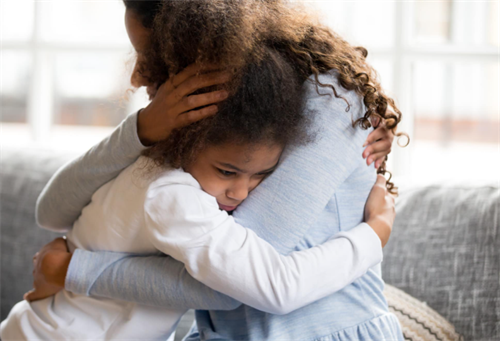
Step 1: Be Sincere—And Meet Them at Eye Level
A genuine apology isn’t about saving face. It’s about connection.
Put away distractions, crouch down, and make eye contact. Speak calmly and clearly.
Avoid the rushed, dismissive tone of “Fine, I’m sorry, can we move on?”
Children can easily sense when an apology is forced or insincere. What they need is your full attention and empathy.
Step 2: Describe the Behavior, Not the Character
Focus on what you did, not who you are.
For example:
“I’m sorry I yelled and threw your books earlier. That was wrong of me.”
Avoid self-deprecating or dramatic statements like “I’m a terrible parent” or “I always mess up.”
These shift attention away from your child’s feelings and make them responsible for comforting you.The goal is to acknowledge your mistake—not to seek pity.
Step 3: Acknowledge the Child’s Feelings
Empathy turns a simple apology into healing.
You might say:
“You must have been scared when I yelled. I can see that it hurt your feelings. I’m really sorry for that.”
This shows your child that you understand how your behavior affected them, validating their emotions instead of dismissing them.
Step 4: Take Full Responsibility—No Excuses
One of the most common traps parents fall into is adding a “but” after apologizing:
“I’m sorry I yelled. I was frustrated, and I shouldn’t have taken it out on you.”
That single “but” wipes out the sincerity of everything said before it.
Instead, say:
“I was frustrated, and I shouldn’t have taken it out on you.”
Children will learn from this that emotional regulation is something everyone—including adults—must practice.
Step 5: Repair, Don’t Bribe
After realizing you hurt your child, you might be tempted to make it up with gifts, treats, or extra screen time.
That’s another subtle form of “meal apology.”
Real repair doesn’t come from presents; it comes from presence.
Instead of offering a new toy, offer understanding:
“Would you like to sit together for a bit and talk, or read your favorite story?”
Your child doesn’t need compensation—they need connection.
Step 6: Collaborate on Preventing Future Mistakes
An apology can also become a learning opportunity.
You might ask,
“If I start losing my temper next time, how can you remind me to calm down?”
This not only gives children a sense of empowerment but also models problem-solving and mutual respect. It transforms a moment of conflict into a shared growth experience.
Step 7: Give Time if They’re Not Ready to Forgive
Sometimes, children may still be upset after your apology—and that’s okay.
Don’t rush them with, “I already said sorry, what more do you want?”
Healing takes time. Let them process their feelings, and keep showing warmth and patience. The goal isn’t immediate forgiveness, but long-term trust.

7. Common Mistakes to Avoid When Apologizing
1) The Excuse Apology
“I’m sorry I yelled. I was angry, and that wasn’t the right way to handle it.”
This shifts blame instead of taking responsibility.
2) The Overcompensating Apology
“I’m sorry, I’ll buy you something to make up for it.”
This teaches that mistakes can be erased with rewards.
3) The Overexplaining Apology
“I was tired, stressed, and had a terrible day, so that’s why I got angry…”
Too much justification turns an apology into self-defense.
4) The Forced Apology
“I said I’m sorry! Stop crying already.”
This turns a moment of repair into another act of control.
A genuine apology is not about fixing your reputation—it’s about repairing the relationship.
8. The Deeper Impact of Parental Apologies
When parents sincerely apologize, children learn powerful emotional lessons:
Accountability – Everyone makes mistakes; the important part is taking responsibility.
Empathy – When children feel heard, they learn to listen to others.
Emotional safety – They know love isn’t withdrawn because of anger or conflict.
Self-respect – They realize that respect goes both ways.
9. A Real-Life Story: The Power of “I’m Sorry”
One evening, a father named Li snapped at his two sons who were arguing loudly over some books. In frustration, he threw the books on the floor and yelled. The boys froze—one terrified, the other in tears.
A few hours later, after cooling down, Li sat beside his son and said quietly,
“I’m sorry, I shouldn’t have yelled or thrown your books. That must have scared you.”
His son looked up, still teary-eyed, and said softly,
“It’s okay, Dad.”
Li described that moment as if “a heavy weight lifted.” His apology didn’t erase the outburst—but it repaired the bond.
He later realized: saying sorry didn’t make him a weaker father—it made him a better one.
10. Teaching by Example
Children who grow up with parents who model humility and self-reflection tend to become adults who:
-Admit when they’re wrong;
-Show compassion in relationships;
-Resolve conflicts peacefully;
-Understand that love and respect are reciprocal;
When apologies and forgiveness become a natural part of family life, children learn that relationships can survive conflict—and that healing is always possible.
Parenting is not about being perfect; it’s about being real.We will lose our temper, make poor judgments, or act unfairly at times. What defines us is not the mistake itself, but how we choose to respond afterward.Saying “I’m sorry” is not surrender—it’s strength. It tells your child:“I value our relationship more than my pride.”And that, more than any lesson, teaches them the true meaning of love, respect, and integrity.
Recommend for you:
The Power of Games: Unlocking Children’s Language, Brain, and Social Skills
When you think of children playing games, you might picture giggles, shouts, and perhaps a little friendly chaos.
How Colors Shape Your Child’s Emotions and Development: A Parent’s Guide to Using Color Wisely?
Have you ever noticed that your child behaves differently in different rooms? Some parents describe how their baby becomes unusually fussy at their grandparents’ house but instantly calms down at home.
How Different Countries Teach Children to Face Challenges?
In today’s rapidly changing world, it has become increasingly clear that intelligence and talent alone are not enough to guarantee success.
Practicing Montessori Education at Home: Simpler Than You Think
If you’ve ever seen a Montessori classroom, you might picture children quietly focused on activities—pouring water, tying laces, arranging flowers—while teachers move gently in the background.