
Breaking the Cycle: How to Stop Childhood Trauma from Passing to Your Children
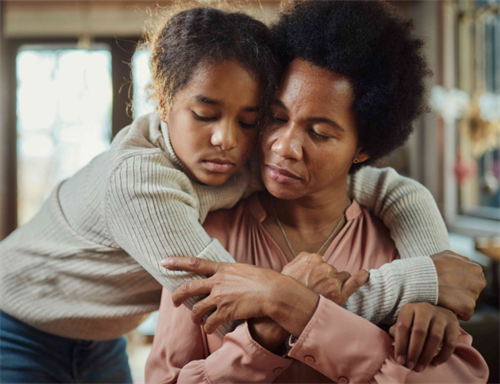
When people are asked, “Do the things that happened in your childhood still affect you today?” the answer, for most, is yes — sometimes painfully so.
Many adults recall not only happy memories but also wounds: being yelled at, ignored, shamed, or even abused. Some grew up under constant criticism or control. Others felt unseen, unloved, or never “good enough.”
What’s heartbreaking is that these early hurts don’t simply fade with time. They linger — shaping how we see ourselves, how we love, and how we parent.
For many mothers and fathers today, the most terrifying realization is this: the pain we once suffered can quietly repeat itself through us, reaching our own children.
This is what psychologists call intergenerational transmission of trauma — the emotional inheritance we never asked for, but sometimes pass on anyway.
1. How Childhood Wounds Follow Us Into Adulthood
Not all scars are visible. A parent who once felt unloved may now overreact when their child pulls away.
Someone who grew up under harsh criticism may find themselves repeating those same words, even when they swore they never would.
Take “Xiao Shi,” a young woman who seemed to have everything — loving parents, caring boyfriends, and a stable life. Yet every relationship ended the same way: she felt ignored and anxious whenever her partner worked late or replied slowly to a message.
Through therapy, she discovered her reactions weren’t really about her boyfriends. They traced back to her childhood — when her emotionally distant parents rarely comforted or validated her feelings. Each time she cried, they told her to “stop being dramatic” and left her alone until she calmed down.
As a little girl, she learned a painful lesson: “I’m not worth loving.”
As an adult, every delayed text felt like proof of that belief.
This is what trauma does — it teaches our brains to expect rejection and prepares our hearts for pain, even when love is right in front of us.
Without awareness, we repeat old emotional patterns, hoping this time the ending will be different.
2. Why It’s So Hard to Outgrow Childhood Pain
(1) Trauma Changes the Brain
Neuroscience shows that childhood abuse or neglect can reshape the brain.The amygdala — the brain’s alarm system — becomes overactive, constantly scanning for threats. Even a neutral tone of voice can feel dangerous.
Meanwhile, the hippocampus, which helps us distinguish between past and present, may shrink.That’s why adults who were once hurt can react to ordinary stress as if it’s a crisis — because, in their nervous system, it is.
(2) Trauma Affects the Body
Trauma isn’t just “in your head.” Studies have linked childhood adversity to weakened immunity, chronic pain, and even heart disease. Constant stress floods the body with cortisol, the “fight or flight” hormone, keeping it in survival mode for years.
A woman once told her therapist, “I know I should leave my abusive husband, but I can’t.”
She wasn’t weak — she was wired for helplessness. As a child, she learned that resistance was dangerous. Her body’s instincts still believed that to be true.
(3) Trauma Lasts a Lifetime — Unless We Heal
Even decades later, the past can shape how we see ourselves. Adults who were shamed as children often carry an invisible guilt: “I must have deserved it.”
They may become overly self-critical, anxious, or perfectionistic — always trying to earn the love they never received.
Trauma does not end when we grow up.
But understanding it is the first step to breaking free.

3. How Childhood Trauma Passes to the Next Generation
You might think: “I’d never treat my child the way I was treated.” And you mean it.
Yet, when your child throws a tantrum or talks back, something inside you snaps — a surge of anger or fear you can’t explain. That’s your inner child crying out.
(1) Emotional Repetition
Parents often unconsciously repeat their parents’ behavior. Those who were controlled may become controlling; those who were ignored may emotionally withdraw.
Even the opposite pattern — being “too kind,” “too indulgent,” or “too protective” — can still come from the same wound: a desperate attempt to give your child what you never had.
(2) The False Self
Many people who grew up having to please others learned to suppress their true feelings to keep peace. As parents, they may sacrifice everything, never set boundaries, and equate self-neglect with love. But a burned-out parent can’t offer emotional stability — and children absorb that tension deeply.
(3) The Victim Mindset
If a parent secretly believes “I’m unlovable,” they may interpret a child’s defiance as rejection. Instead of seeing a child who needs guidance, they see a mirror of their own pain — and the relationship turns into a power struggle.
The truth is, our children don’t just inherit our eyes or hair. They inherit our emotional climate.
If we carry unresolved fear, guilt, or anger, they feel it too — through tone, energy, and even silence.
4. The Science of Trauma Transmission
Recent research offers powerful evidence that parental trauma affects children not just emotionally but biologically.
A study found that parents’ childhood maltreatment can directly impact their children’s sleep quality.
Fathers’ trauma was linked to children’s higher stress and poorer sleep, partly due to increased household tension or even intergenerational conflict with grandparents.
Mothers’ trauma often led to lower self-control and emotional regulation, which affected how consistently they responded to their children’s needs. Children who sensed emotional instability at home experienced more anxiety and nighttime awakenings.
When parents remain in a state of inner alarm, children sense it — their bodies, too, stay on alert.Healing yourself is not only for you. It’s also for your child’s peace, growth, and sleep.
5. Healing Begins with Awareness
Healing intergenerational trauma doesn’t mean blaming your parents.It means acknowledging what happened — and refusing to let it continue.Here’s how you can begin:
(1) Notice Your Triggers
When your child’s behavior sparks an outsized reaction, pause. Ask yourself:
What does this remind me of?
Is my reaction about my child — or my past?
If you feel overwhelmed, say gently:“Mommy/Daddy needs a moment to calm down. We’ll talk in five minutes.”
This models emotional regulation — one of the greatest gifts you can give your child.
(2) Practice Self-Compassion
Say to yourself what you needed to hear as a child:
“It wasn’t my fault.”
“My needs matter.”
“I deserve love and respect.”
Self-compassion isn’t self-pity — it’s self-healing.When you soften toward your own pain, you stop hardening toward others.
(3) Repair, Don’t Perfect
Even the best parents lose patience. What matters is what you do next.
After calming down, tell your child:“I was upset earlier, and I raised my voice. That wasn’t okay. I’m sorry. Thank you for waiting while I calmed down.”This teaches that relationships can break — and mend.
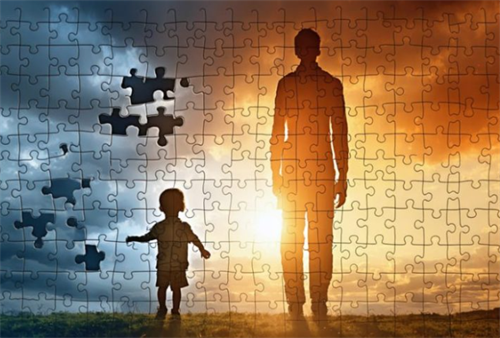
6. Building a Healthy Parent–Child Relationship
Healing trauma is not a one-time act. It’s a lifelong practice — but one that transforms families.
(1) Communicate with Empathy
Replace blame with nonviolent communication:
“I see you spilled the milk. I feel worried. Can you help me clean it up?”
When children express strong emotions, name their feelings:
“You’re upset because the toy broke, right?”
Labeling emotions helps children understand, not fear, their inner world.
(2) Create “10 Minutes of Connection” Daily
Set aside ten uninterrupted minutes each day to simply be with your child — no phones, no instructions.
Let them lead the play or conversation.
This undivided attention tells them: You matter.
(3) Involve the Extended Family Wisely
In many cultures, grandparents play a vital role in childrearing. This can be a blessing — or a battleground.
Hold family meetings to clarify roles:
“Mom, Dad — I’d love your help with meals and bedtime, but I’ll handle schoolwork decisions.”
If disagreements arise, respond with respect and calm authority:
“I know you care deeply about the child. The doctor suggested we try this method for a week — let’s see how it goes.”
(4) Seek Support
You don’t have to heal alone.
Join parenting circles, online communities, or therapy groups where you can share experiences safely.
If old memories still haunt you, professional counseling can help you process them — freeing both you and your child from their weight.
7. When Old Patterns Resurface
Healing isn’t linear. You’ll have days when you slip back into old habits.
When that happens, don’t shame yourself. Simply pause and repair.
You can even say to your child:“I didn’t handle that well. Let’s start over.”
That moment of honesty shows your child that love doesn’t require perfection — only presence.
8. The Long-Term Impact of Breaking the Cycle
Parents who face their pain bravely change not just their own lives, but generations after them.
When children grow up feeling safe, respected, and loved, they develop stronger self-esteem, better emotional regulation, and healthier relationships.
Conversely, unhealed trauma can echo through a family for decades — manifesting as anxiety, depression, low self-worth, or difficulty forming trust.The good news? The cycle can stop with you.
A healthy family doesn’t mean a perfect one.It means one where people are allowed to feel, to fail, and to forgive.So, to every parent who once felt small, unseen, or unloved — your story doesn’t have to end that way.
By facing your past with compassion, you teach your child that pain can transform into strength, and that love — real love — heals.
Recommend for you:
Why are the children in France calm, confident and happy? The true secret of French parenting
Why do French children seem so calm, polite, and well-behaved — even in public places where chaos often reigns?
Breaking the Cycle: How to Stop Childhood Trauma from Passing to Your Children
When people are asked, “Do the things that happened in your childhood still affect you today?” the answer, for most, is yes — sometimes painfully s
How to Rebuild Your Career After a Full-Time Parenting Break?
For many women, stepping away from the workforce to raise children is a deeply intentional and meaningful choice.
Wise Parents First Take Care of Themselves
Parents often submerge themselves wholly in the demands of raising a child—putting their own needs on hold, surrendering sleep and free time, abandoning hobbies or dreams